Who Owns The Seed?
A seed is never just a seed. It’s a tiny capsule of history, carrying the tastes, migrations, and care of generations.
Seeds from just a handful of grass families - wheat, rice, maize, sorghum, and millets - now supply most of the world’s calories. Not by chance, but by policy, scale, and a steady push towards uniformity.
That archive is thinning. Over the past century, around 75% of crop diversity has disappeared. Ecologists measure yield; economists, cost. But what slowly slips away is the knowledge that once rooted people in place: recipes, rituals and flavours.
Culture comes from ‘cultura’, meaning the care of land. Seeds sit at the root of that meaning, a reminder that culture began as practice, and tending. In cities across the world, that loss is felt in quieter ways.
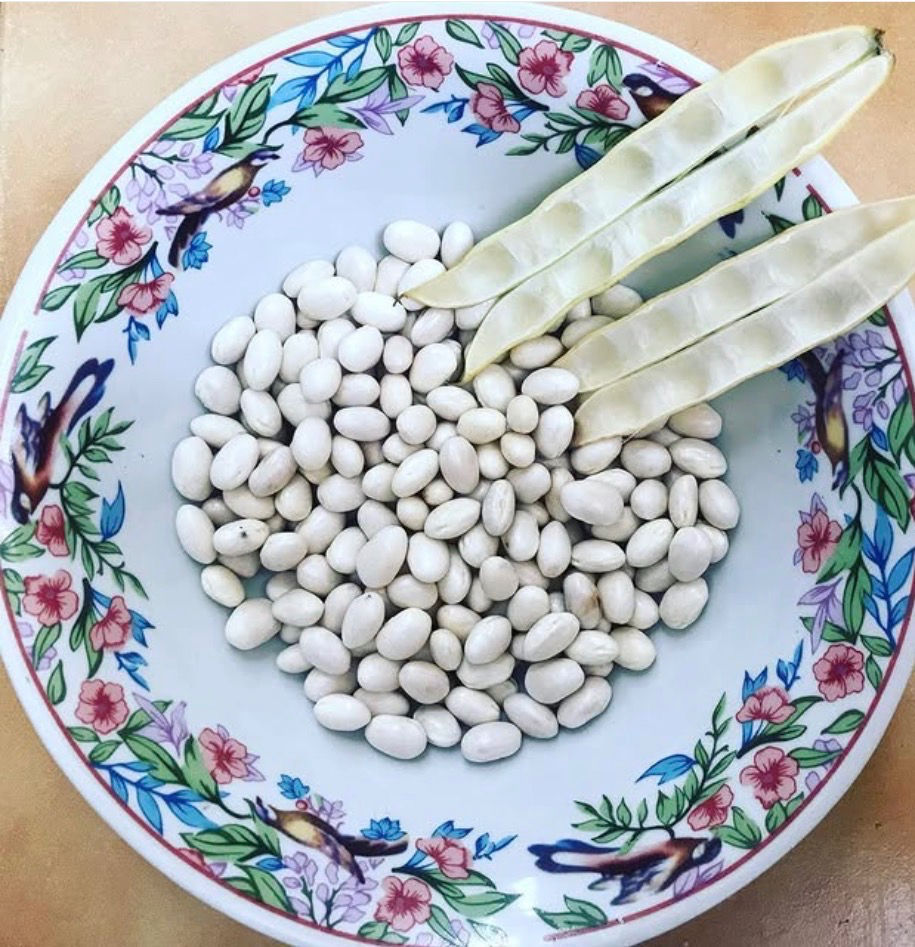
For diasporic communities, food becomes a fragile cord to the homeland. Increasingly, that connection is shaped by supply chains that favour uniformity. What cannot be standardised struggles to circulate.
Heritage seeds carry a different logic. Millets once passed from hand to hand, varieties shaped over generations by soil, climate, and taste. They are never just crops, but memory carried in biological form.
Robin Wall Kimmerer, the botanist and Indigenous writer, reminds us that the living world is not a backdrop but a community shaped by reciprocity. Rowen White, an Indigenous seedkeeper, speaks of seeds as carriers of cultural memory, holding ancestral knowledge within them. Together, they remind us that seeds are teachers, archives and relations.
But modern systems treat seeds differently.
This is where the soil meets the state. Food is never neutral. Policy shapes biodiversity, and often simplifies it. When agriculture is standardised, heritage varieties are pushed to the margins, sometimes made effectively unviable.
As corporate concentration grows, seeds shift from a shared resource into a regulated commodity. To control the seed is to shape the food system
Seed sovereignty has become a quiet political fault line. On one side stand farmers and Indigenous groups. On the other, large agribusinesses and regulatory systems. Who gets to grow, save, and share seeds is increasingly decided by law and business.
Under agreements such as UPOV ’91, seeds are treated as intellectual property. Plant breeders are granted exclusive commercial rights, while farmers lose the ability to save, exchange, and replant seeds - a practice they have relied on for generations.
Supporters argue this protects innovation. Critics say it concentrates control, reduces genetic diversity, and increases dependency, especially for smallholder farmers who produce much of the world’s food.
In countries like Kenya, debates over seed law have become questions of identity and authority. Whose knowledge counts. Whose practices are allowed to endure. Recent rulings have begun to restore farmers’ rights to save and share seeds, but these gains remain fragile.
What is at stake is not only biodiversity, but governance. The question is not just what we grow, but what we are willing to lose — and who holds the power to decide.
Follow our journey @movimento.metropolitano